In the chaotic symphony of a firefight—the roar of flames, the shouted commands, the hiss of extinguishing agents—one small, critical component works silently to ensure order and, ultimately, victory. This component is the fire fighting hose coupling. Far more than a simple connector, it is a precisely engineered lifeline, a guardian of pressure and flow, and a universal language spoken by firefighters worldwide. Its design, evolution, and standardization are a testament to the relentless pursuit of efficiency and safety in fire suppression.
At its core, a hose coupling is a device for connecting fire hoses to each other, to pumps, hydrants, and nozzles. Its primary functions are deceptively simple: to join sections securely, contain immense water pressure (often exceeding 300 psi), and allow for rapid deployment and detachment. Yet, achieving this under extreme conditions requires sophisticated engineering. Modern couplings are typically forged from lightweight, high-strength aluminum alloys or brass, offering corrosion resistance and durability. The heart of the connection lies in the threads and the gasket. The threads—whether spiral or parallel—provide the mechanical lock. The gasket, seated in a swivel gland, creates a pressure-tight seal. This elegant combination prevents life-threatening blowouts and precious water loss at the source.
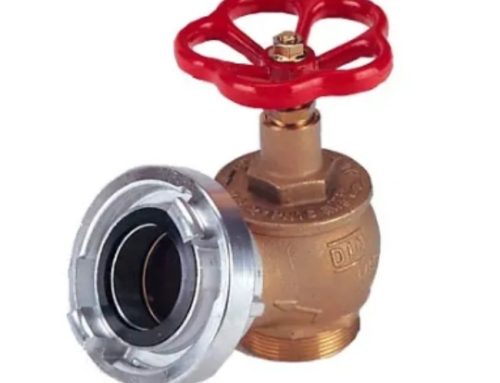
The world of couplings is broadly divided into two camps: threaded and storz (quick-connect). Threaded couplings, the traditional workhorses, require a male end to be screwed into a female end. While reliable, this process is time-consuming and requires careful alignment. The Storz coupling, named after its inventor, represents a revolutionary leap. This genderless, lug-operated mechanism allows firefighters to slam two ends together with a simple quarter-turn, achieving a perfect seal in seconds. In time-critical operations, this speed is invaluable. The choice between systems often hinges on regional standards and the specific demands of the operation, with many departments now adopting Storz for large-diameter supply lines.
Perhaps the most crucial aspect of the fire hose coupling is standardization. The infamous historical lesson of incompatible couplings between different cities, which hampered mutual aid during great fires like the 1904 Baltimore conflagration, led to a transformative movement. In North America, the National Standard Thread (NST) became a benchmark. While variations like NH (National Hose) threads for fire service and NPSH (National Pipe Straight Hose) threads persist, the principle is universal: interoperability saves lives. Today, agencies like the National Fire Protection Association (NFPA) enforce strict standards (NFPA 1963) on coupling design, dimensions, and pressure ratings. This ensures that a fire engine from Austin can seamlessly connect to a hydrant in Boston, fostering a nationwide network of resilience.
Maintenance of these couplings is a non-negotiable ritual in fire service. After every use, they are meticulously cleaned to remove debris that could damage threads or gaskets. They are inspected for cracks, worn threads, and “spinning”—a condition where the coupling rotates independently of the hose, indicating a failed attachment. Gaskets are replaced regularly. This preventative care is paramount; a failed coupling under pressure can become a lethal whip, capable of causing severe injury or catastrophic loss of water.
Looking forward, the evolution of the fire hose coupling continues. Innovations include ultra-lightweight composite materials, integrated radio-frequency identification (RFID) tags for inventory and lifecycle tracking, and even smart couplings with embedded sensors to monitor internal water pressure and temperature in real-time. These advancements point toward a future where this humble connector becomes an active data node in the fireground Internet of Things.
In conclusion, the fire fighting hose coupling is a masterpiece of focused engineering. It embodies the fire service’s core values: strength, reliability, universality, and an unwavering commitment to preservation. It is the critical, unseen link that transforms standalone lengths of hose into a continuous, powerful stream of hope. From the brass threads forged a century ago to the quick-connect lugs of today, it remains a silent sentinel on the fireground, ensuring that when the call comes, water will flow without fail. It is, in every sense, the connector that fuels courage.